

Liam Aiken is an American actor who built a career on screen before he turned ten, then kept working steadily into adulthood. He is best known for playing Klaus Baudelaire in “Lemony Snicket’s A Series of Unfortunate Events” and for supporting roles in “Stepmom” and “Road to Perdition.” Born on January 7, 1990, in New York City, he has spent close to three decades moving between studio films, independent projects, and television guest spots.
Early Life and Family
Liam Pádraic Aiken was born in New York City and raised largely in New Jersey. His mother, Moya Aiken, is an artist born in Ireland. His father, Bill Aiken, worked as a producer at MTV and had Scots-Irish roots. Bill died of esophageal cancer in September 1992, when Liam was two years old, leaving Moya to raise him as an only child.
Aiken attended Dwight-Englewood School in New Jersey, graduating in 2008, and later studied at New York University. School and film sets ran in parallel for much of his childhood. On location, tutors gave him assignments between takes so his education kept pace with a full production schedule.
His first professional job was not a film at all. He landed a Ford Motor Company commercial around age seven, which led to a small stage role in the Broadway revival of Henrik Ibsen’s “A Doll’s House.” That production put him in front of casting directors who were about to change the direction of his childhood.
Breaking Into Film
Aiken’s first screen credit came in Hal Hartley’s “Henry Fool” (1997), where he played Ned, the son of Parker Posey’s character. The role was small, but the reviews for the young actor were not. Casting directors noticed a kid who could hold a scene next to seasoned adults.
That notice turned into steady work fast. In 1998 alone, he appeared in “Montana,” “The Object of My Affection” opposite Paul Rudd, and “Stepmom,” where he played Ben Harrison, the son of characters portrayed by Susan Sarandon and Ed Harris. “Stepmom” put him on a much larger stage. Critics noted his ability to shift between a lovable kid and a boy dealing with a parent’s serious illness, and the performance earned him a Young Artist Award in 1998.
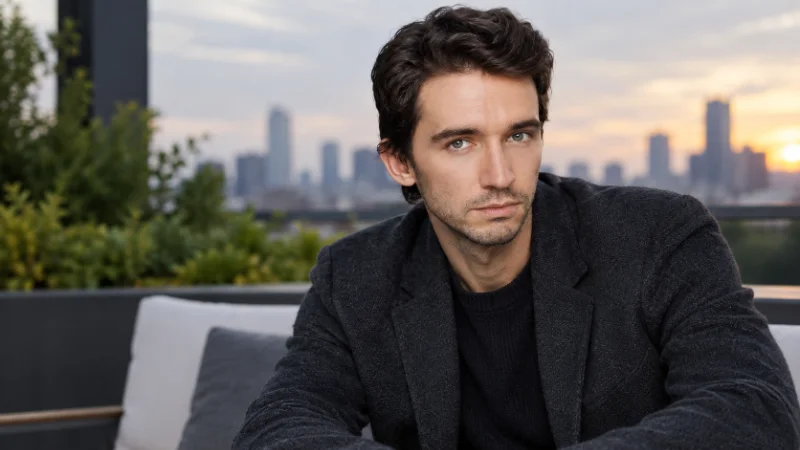
He followed that with “I Dreamed of Africa” (2000), playing the young Emanuele opposite Kim Basinger, and “Sweet November” (2001) alongside Keanu Reeves and Charlize Theron. In 2002 came “Road to Perdition,” where he played Peter Sullivan, the younger son in Sam Mendes’s Depression-era crime drama starring Tom Hanks. A year later, he starred in “Good Boy!” (2003) as Owen Baker, a role that made him familiar to a younger family audience outside the awards-season crowd he had been working in.
Playing Klaus Baudelaire
Aiken’s most recognized role came in 2004, when he played Klaus Baudelaire in “Lemony Snicket’s A Series of Unfortunate Events,” based on Daniel Handler’s book series. Klaus is the middle Baudelaire sibling, an orphan whose parents die in a fire and who relies on reading and reasoning to protect his younger sisters from Count Olaf. The film paired Aiken with Jim Carrey and Meryl Streep and became the role most audiences still associate with him.
The performance brought him a nomination for a Critics’ Choice Award at the 2005 Broadcast Film Critics Association Awards for Best Young Actor. Between 2012 and 2015, he stayed connected to the world of the story by narrating the audiobooks for “All the Wrong Questions,” a prequel series to the original Lemony Snicket books, giving fans of the franchise a second reason to know his voice as well as his face.
Television Work and Guest Roles
Alongside his film career, Aiken picked up guest roles across several long-running television series. He appeared on “Law & Order” and its spinoff “Law & Order: Criminal Intent” in multiple separate episodes over the years, playing different characters each time. He also had a guest spot on “Mad Men,” playing a character named Rolo, and appeared in the CBS drama “A Gifted Man” in 2011.
These roles rarely made headlines on their own, but they kept him working through a period when many former child actors quietly leave the industry. Television guest spots gave him range across genres, from courtroom drama to period television, without requiring the schedule of a lead role.
Stepping Back From the Spotlight
By his late teens, Aiken had scaled back the pace of his earlier career. He enrolled at New York University around 2008, the same period many young actors either commit fully to the industry or step away from it. Aiken chose a middle path, continuing to take roles while also pursuing his education.
Public attention around this stretch of his life was thinner than during his childhood years, and some of that was deliberate. Rather than chasing every audition, he leaned toward smaller, independent projects that let him work as a craftsman rather than as a former child star trying to stay visible.
Return Through Independent Film
Aiken’s adult career has leaned heavily on independent and festival films rather than studio franchises. In 2010, he appeared in “The Killer Inside Me” as Johnnie Pappas. In 2012, he played a young man returning home after years away in “Nor’easter,” directed by Andrew Brotzman.
In 2014, he took the title role in “Ned Rifle,” the third film in Hal Hartley’s trilogy that began with “Henry Fool,” the same film that launched his career seventeen years earlier. Playing the grown-up version of the character connected to his very first screen role gave the project a full-circle quality that few actors get to experience.
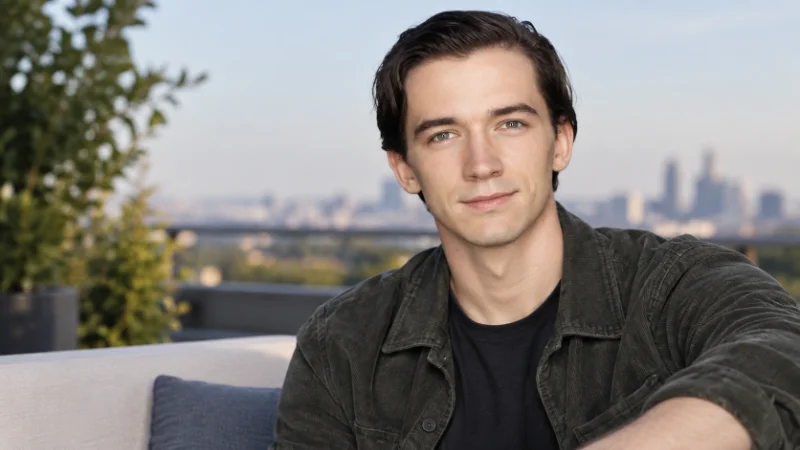
He continued working through the following decade with roles in “The Frontier” (2015), “Like Lambs” (2016), “The Honor Farm” (2017) and a voice role in “The Emoji Movie” (2017). In 2020, he starred in “The Bloodhound,” a mystery drama inspired by Edgar Allan Poe’s “The Fall of the House of Usher.” In 2021, he took a lead role in “Bashira,” playing an electronic musician confronting a string of unsettling, dreamlike events, directed by Nickson Fong.
Where Liam Aiken Is Now
Aiken has stayed active in recent years without returning to the level of mainstream visibility he had as a child. He appeared in “Montauk” (2025) as J.R., directed by Sean Nalaboff, and in “V13” (2025) as Hugo. Both projects reflect where his career has settled: smaller casts, festival circuits, and directors working outside major studio systems.
He tends to keep a low public profile between projects rather than maintaining a constant media presence, which fits a pattern common among actors who started as children and wanted their adult work judged on its own terms. What has stayed consistent since “Henry Fool” in 1997 is the steady stream of credits. Few actors who started this young at this level of visibility have kept working this long, across this many genres, without a long gap in their filmography.
For anyone who grew up watching Klaus Baudelaire outsmart Count Olaf, or who remembers a younger Liam Aiken standing next to Tom Hanks in “Road to Perdition,” his current work in independent film is less a comeback than a continuation. He never really stopped.